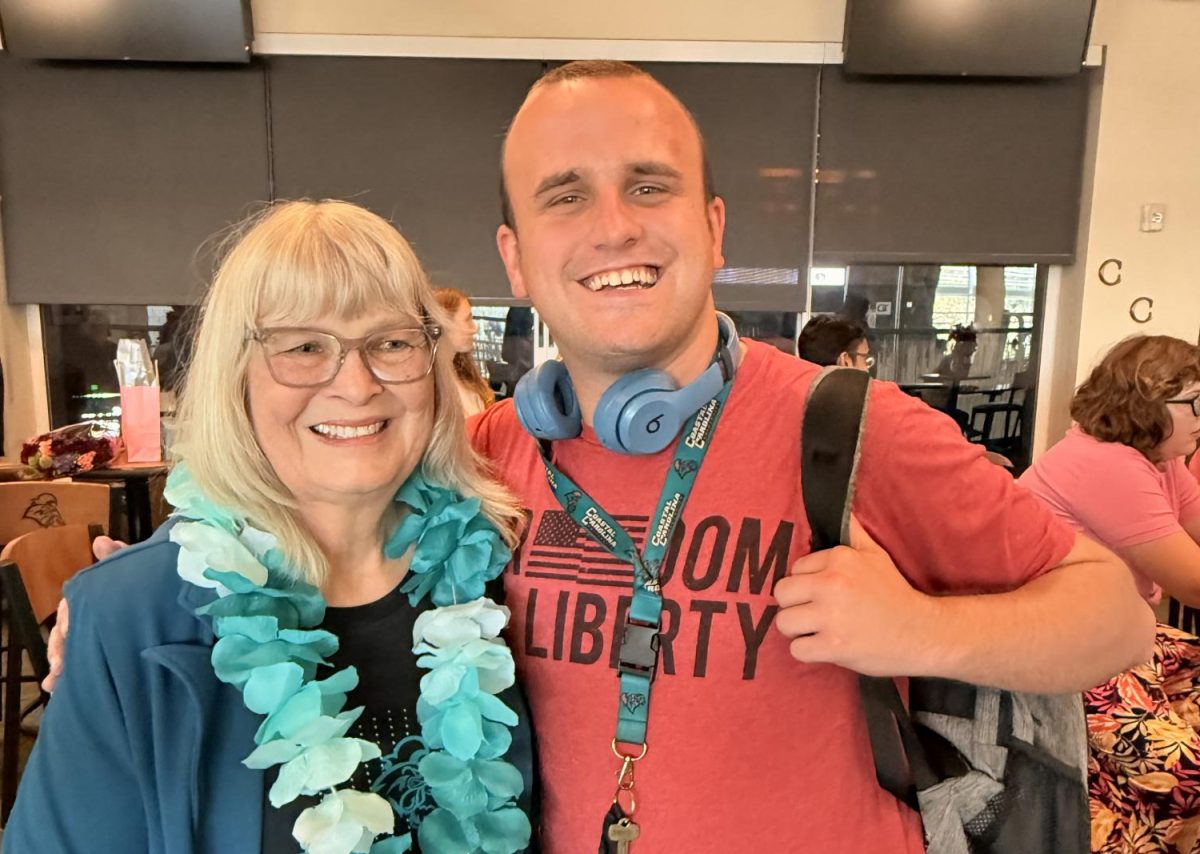
The CoastalLIFE program’s former director, Cheryl Morgan, officially retired after dedicating ten years to the program and paving the way for its significance at Coastal Carolina University.
“This has been amazing experience. I have learned so much, I’ve grown so much, and I’ve met some amazing humans,” Morgan said.
Commonly referred to as the LIFE program, the inclusive post-secondary program for young adults with intellectual disabilities stands for “Learning is for Everyone.”
Morgan helped shape the curriculum and support services which define the LIFE program today. She developed intentional reading and math instruction tailored to practical, real-world scenarios. Reading instruction focused on navigation skills, traffic signs, safety directions and other elements of community-based literacy.
Morgan explained how her goal was to make sure students were learning what they needed to learn to be successful. She said her earliest observation was that students needed strong foundational support in employment skills and independent living. So, instead of traditional academic exercises, students practiced budgeting, learned how to allocate money for weekly needs and mastered understanding expiration dates.
The program’s mission is centered on preparing students to participate meaningfully in adulthood, whether through employment, independent living or community involvement.
Morgan noted that nationally, employment rates for individuals with intellectual and developmental disabilities remain low. According to federal estimates, employment rates for adults within this demographic range between 17%-24% and average earnings at or below minimum wage. However, Morgan said CoastalLIFE graduates increase their chances of employment exponentially.
‘‘The first cohort of students that finished the internship program that we started in 2018, 85% employment,” Morgan said. “After we started the internship program, we saw our students thrive in the employment setting. Seeing them become meaningfully employed afterwards was the most meaningful to me during my time here.”
With these focuses on employment skills, CCU’s LIFE program’s employment outcomes stand out. The program is in the top five of the 300 programs in the U.S., and they’ve received two international recognitions for their employment outcomes.
Morgan said this accomplishment reflects both the students’ dedication and the program’s strategic structure.
“That speaks volumes to our ability to listen to others,” Morgan said.
The recognition, Morgan added, is nothing compared to the relationship she’s been able to foster with students.
“I enjoyed the opportunities to be able to collaborate with peers on campus. The relationships have been so amazing. I felt at home as soon as I first stepped foot on campus to be interviewed,” Morgan said.
Founded on the belief that all students deserve equitable access to education and transition preparation, the program has become a cornerstone of CCU’s commitment to providing a secure environment for every student.
As she transitioned out of her role, Morgan offered advice for the newly appointed director, Brian Keys.
“Decide your leadership style and stick with it and set boundaries,” Morgan said.
Keys said he is eager to build on the strong foundation laid out by Morgan as well as the staff and student mentors.
Keys explained how the program strives to ensure students feel their voices matter and that their educational journey reflects their personal goals. He said students in the LIFE program having the ability to choose their own internships and academic courses based on their interests and goals help develop self-advocacy and independence.
‘‘Inclusiveness is a big and important thing here on campus making each and every student feel welcomed and feeling involved and all granted the same fairness of opportunity to learn and grow and expand as great leaders,’’ Keys said.
With a new director and a strong legacy behind it, the LIFE program progresses while honoring the foundation built by Morgan. Keys said he hopes to expand opportunities for community involvement, internships and campus engagement while maintaining the program’s student-centered approach.