We’re in a day and age where we need scholars (and a student journalist) to share the secrets on how to have a civil conversation.
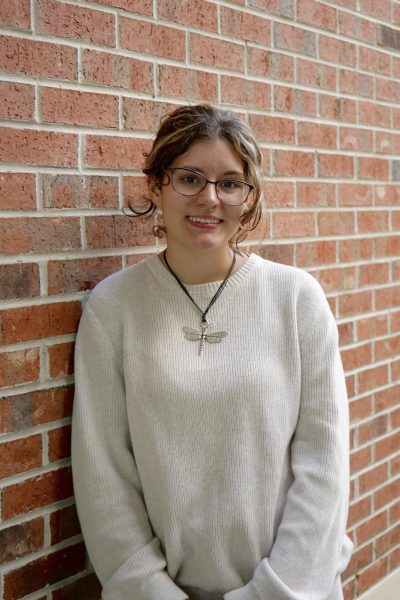
As a senior communication major and Editor-in-Chief of The Chanticleer, this past Humanities Week at Coastal Carolina University I was invited to speak on the panel “Putting the Public in Public Humanities: Scholars as Civic Translators in a Noisy World.” I sat alongside three CCU professors, each bringing expertise and knowledge from his own field.
As an award-winning journalist and associate professor of journalism, Adam Pitluk emphasized the importance of tailoring your speech to your audience in an impartial, effective manner.
Justin Vaughn, a scholar of American politics and culture, as well as an associate professor of political science, shared how he has shifted his approach from advising people how to talk about politics, or where to get their facts, to inviting people to share their views and going from there; creating a space where people feel heard and in turn are willing to listen.
Guiding the conversation with questions, Robert Batchelor, a cultural historian and assistant professor of communication, media and culture, commented on strategic communications. He elaborated on how effective communication is vital in all areas of life and embedded in living American culture.
Mix it all together, in a world where division and polarization are ruining our ability to learn and converse; each panelist agreed that empathy is a must.
We, as humans, are the most emotionally complex creatures to science’s knowledge up to this point. And while that’s what made everything so complicated, acknowledging this truth is the first step.
We are emotionally complex, fueled with passion for the topics that divide us. To make things more interesting, we are living in a polarized society, consumed by filter bubbles and convinced we have the right answer. We turned quickly from a civilization that knew nothing, to the one that knew everything.
This is what draws me to journalism: with research, interviews and translating it all to an audience in a compelling, informative way, comes empathy. It takes true listening, learning and understanding. Learning up-close from story tellers themselves, and in turn sharing their story, makes it all worth it to me.
I can’t effectively share someone’s story or thoughts if I don’t understand it from their point of view. This panel conversation helped me realize that I can’t effectively share my own thoughts without listening to others either.
A few days after the panel, while scrolling on social media, I came across a political comment reposted by a family member. I immediately became flustered, angry and hurt. I began rushing through thoughts of how I should reply, how I could make something that seemed so obvious to me stick.
I had to stop myself and think about what I learned from these scholars a few days prior and what I had spoken about myself.
I thought, this is still just a repost. It isn’t even my family member’s own words. Before I take it too personally, I should give them a chance to share their own thoughts.
Now, this wasn’t easy. It may come more naturally to others, but it took me a solid hour-and-a-half of deep breaths before I could address the topic in person.
I kept trying to convince myself to let it go, that it would cause more trouble to try to reason or have a discussion. But the harder I tried to push it down, the more unsettled I became, and I knew my own assumptions would grow without facing the conversation directly.
I calmed down, mustered up the nerve and braced myself for her response.
“I have a question. And it may not be one you want to answer, but it’s going to keep bugging me until I ask,” I said. Once I knew it was okay to continue, I asked, “what do you think of __.”
I listened to her thoughts and explanations, “listening to hear, not to speak,” as my dad would say. We asked each other questions and found, to our surprise, that we had more in common than either of us expected.
What a boring story, right? But now I can sit across from my family member in peace and still respect someone I’ve always loved dearly.
Some say politics shouldn’t come between relationships; some say it’s not just about politics but morals.
Controversial topics are rarely as black-and-white as they seem. Having this conversation based on mutual respect reminded me that someone can stand behind what they think is just a political affiliation or opinion but still be morally good (whatever that entails). It’s complicated, but worth trying to learn about.
I think usually someone — or both parties — lack context and information. The algorithm-based filter bubbles won’t evaporate on their own, leaving it up to old-fashioned verbal communication. How can we learn and grow if we don’t have the hard conversations?