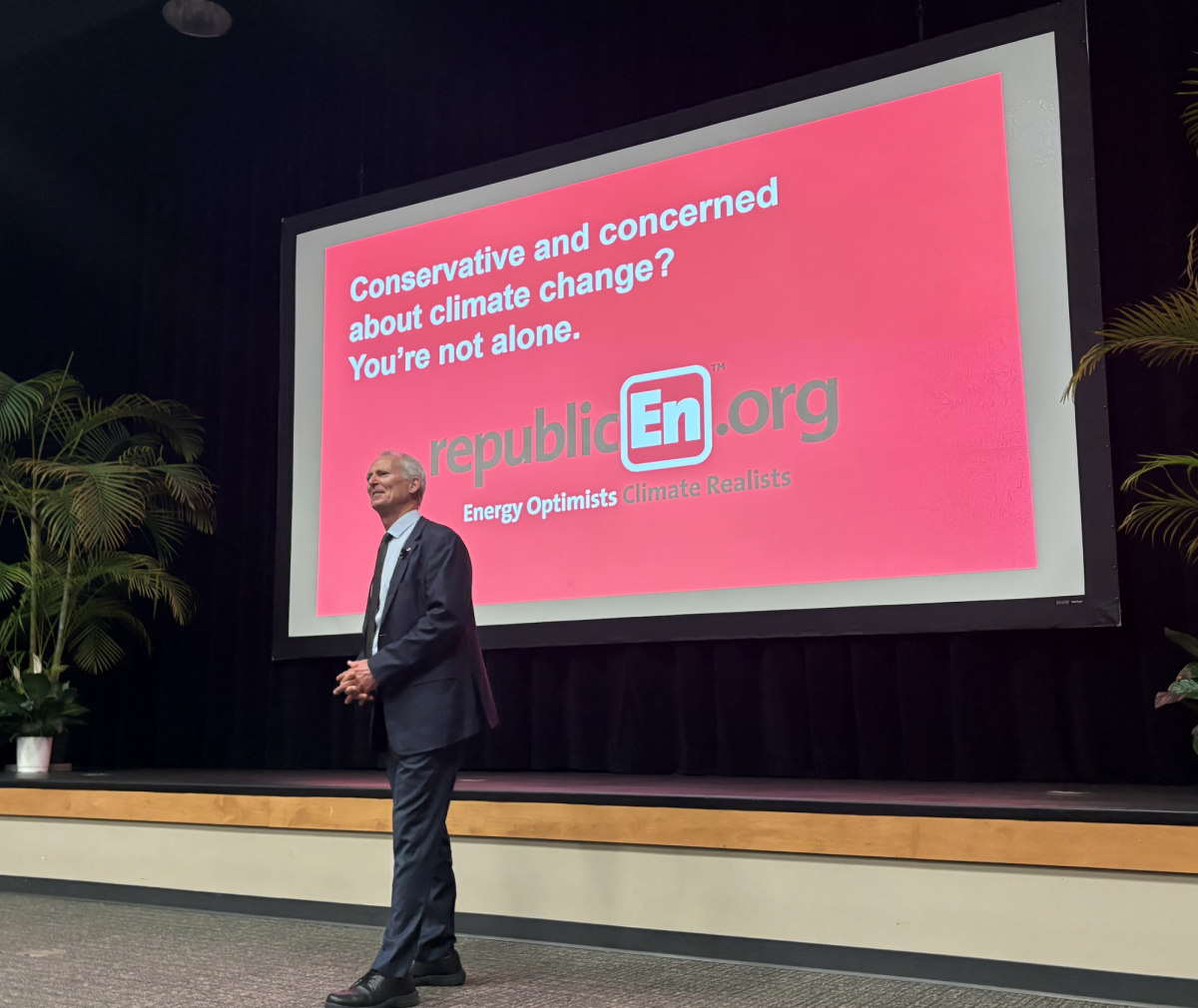
At Coastal Carolina University’s 2026 Sustainability Symposium, former congressman Robert “Bob” Inglis said the solution to an erupting climate crisis is “just fix the economics.”
After serving as a Republican U.S. representative for South Carolina’s 4th congressional district, representing Greenville and Spartanburg counties from 1993–1999 and 2005–2011, Inglis committed fully to promoting free enterprise action on climate change. Since launching the Energy and Enterprise Initiative in 2011 and later rebranding as RepublicEN.org, Inglis and his team have spent over two decades traveling around the country to educate communities — especially those who identify as Republican — about their fiscally conservative approach to reducing climate change: a carbon tax.
Inglis explained how by taxing production companies for emitting carbon dioxide into the atmosphere during the manufacturing process, the tax will trickle down into the price of the product for the consumer. Inglis further explained how reducing income or payroll taxes will balance the burden for the consumer, allowing them the choice in which product to buy. Because of the carbon tax, at this point sustainably made products will cost the supplier less to produce, ensuring a cheaper market price and increase in demand.
“That will unleash the power of free enterprise to deliver innovation faster than government regulations or fickle tax incentives can ever imagine,” Inglis told The Chanticleer.
The annual CCU sustainability symposiums are hosted by the university’s President’s Council for Sustainability and Coastal Resilience (PCSCR). Associate Professor of Political Science Justin Vaughn is also a PCSCR member and one of the co-founders of the university’s Coastal Civic Initiative. Vaughn proposed the idea of inviting Inglis to speak at this year’s symposium after engaging with him at a university event hosted in 2025.
“Having somebody who’s professionally focused on bridging these political differences on an issue that’s related to the environment makes it kind of a perfect match with the work we’re doing,” Vaughn said. “There’s a lot of assuming ‘everybody agrees with me’ or that ‘if I can just educate them on the things that I care about, they will also care about it.’ And instead, you could say, ‘hey, look, there’s other ways to talk about this issue.’”
Student Paiton Hagen, a junior sustainability and coastal resilience major, said she appreciated Inglis’ intention and involvement.
“There’s a lot of conversations about politics around our field and the things that we study, and it usually is more democratic or liberal leaning. And so, it was really refreshing to have a conversation with a Republican and somebody who has conservative values who also cares about those same things that I care about regarding the environment,” Hagen said. “I think it’s a great way to take the environmental issues and climate change issues that we’re having in our country and globally and make them more into bipartisan issues, rather than it being this big divisive issue even though it affects all of us, no matter your political identity.”