


Coastal Carolina University is heading in a direction to increase accessibility on campus, which some students believe is long overdue.
Emily Gaspar, director of CCU’s Accessibility and Disability Services (ADS) and interim assistant vice president for University Belonging and Student Affairs, said that the university has prioritized complying with recent federal guidelines. The U.S. Department of Justice Civil Rights Division federally mandated that all public universities are to be in compliance with the Americans with Disabilities Act (ADA) Title II and Web Content Accessibility Guidelines (WCAG) 2.1 AA, by April 24.
This act and specific rule requires state and local governments to ensure that all services, programs or activities of state and local governments, including those offered online and through mobile apps, are accessible to people with disabilities.“That’s been a big focus of the university, and there’s a large working group and steering committee that’s focused on meeting that deadlineand identifying resources for our faculty or staff who need to work on updating course content or websites or those sorts of things. And there’s an interim ADA, so Americans with Disabilities Act, compliance officer who’s also helping to lead that charge,” Gaspar said.
While Gaspar takes pride in the ADS efforts to grow and improve, some students have voiced concerns about accessibility around campus. Phillip Burrell, a senior sports media and journalism major, shared that his brother, Logan Burrell, has cerebral palsy and frequently visits campus.
This has led Phillip Burrell to witness what he describes as a lack of representation and accommodation on campus, feeling like advocacy for disability is overlooked. “GG Lot, the spaces are at almost the back of the parking lot. The entire closest spots that are closest to the academic buildings, that we would be going to, they’re literally all just regular sports, and those are all full by 8 in the morning,” Phillip Burrell said.
Logan Burrell, a University of North Carolina at Charlotte alum, reported that struggling with inaccessibility is not a new or rare occurrence. “One of the best points that he[Logan] made … was he had a 15-page paper due, and that’s hard enough for people like you and I who have use of both their hands to do in a week, that’s already a daunting task. Now, imagine tying one of your hands
behind your back and having to do that,” Phillip Burrell said.
Tiana Garcia, a senior supply chain management major, spoke on what she thought were some of the most common issues that she has noticed on campus.
“If I’m being completely honest, I just think that laziness has just gone off the chain. It’s so bad. And I’m not trying to say like the workers specifically or not, or the students, but I think it’s everyone,” Garcia said. “As an example, the main elevator in Wall was broken for like the entire semester and then all of a sudden they want to go ahead and fix it, but they want to fix it during the next semester, when it should’ve been done over winter.”
While there are still improvements to be made, according to CCU’s official website, ADS emphasizes accessible physical and digital spaces, inclusive culture and recognition of disability and chronic health conditions as important parts of an identity.
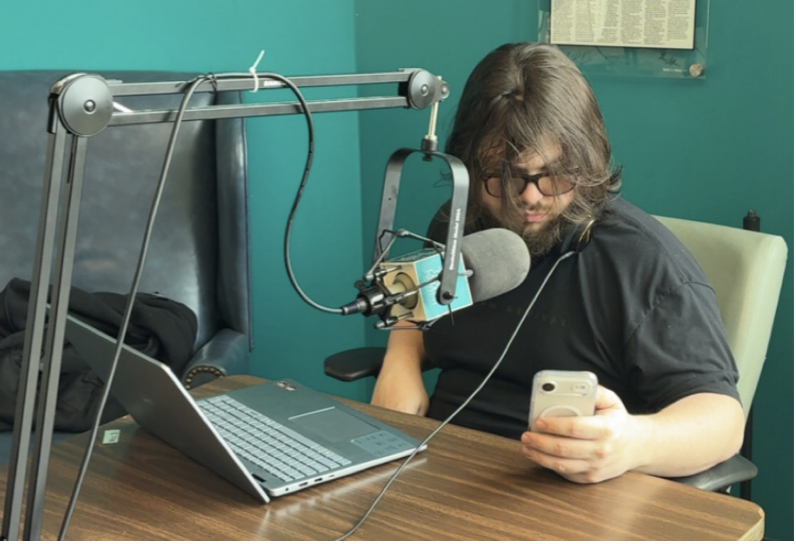
“Working in Accessibility and Disability Services, we’re pretty aware of how many students use accommodations and that sort of thing, but I don’t think that it’s understood how prevalent it is. So, about 10% of the student population has accommodations,” Gaspar said. “I think sometimes people might underestimate it and think it’s not that common, but definitely having a disability is just kind of another identity that people have, like gender, race, those sorts of things.” To put this into perspective, the Burrell brothers use their radio show with WCCU radio, “Built Different,” to advocate for greater awareness and support for individuals with disabilities.
“We’re wanting to build it into something where we can eventually have fellow disabled students on campus come and talk about their experiences. We kind of talk about the stigmatization of certain disabilities, and how at the end of the day, there is no normal, but people just want to feel normal no matter what their differences are,” Phillip Burrell said