Although she doesn’t have a name, I’ve met a woman who I now know to be myself, my sisters and my friends: the universal woman.
You may know her as Fleabag: the sex obsessed, flawed, unfiltered and hysterical fictional character who stars in the masterpiece of a show that is, “Fleabag.”
“Fleabag” is a two season drama series that first began as a one woman show, written and starring Pheobe Waller-Bridge. When people ask me what the show’s about, I find myself only able to say, “a woman. It’s about a woman.”
Now, that may seem awfully boring, but it’s simply impossible to describe the show’s excellence verbally. The only description I can relay is a wide grin, indistinguishable noises of excitement and “you just have to watch it!”
I first watched “Fleabag” at the request of my twin sister, who is never wrong about show recommendations. I’ve learned if she likes it, it’s excellent. I didn’t start at the beginning though; I joined her on season two and was met in the middle of chaos.
Chaos is, however, what drives the show, and so, I was starstruck by what I noted to be the first true depiction of femininity. Not the flowery, pink and virgin-esque femininity. No, this was the real, disgustingly honest femininity with all its complexities.
For the first time in my life, it was as if someone had split open my skin, stepped inside and worn it around for a day. Perhaps even as if something had crawled through my ear, listened to my thoughts, wrote them down and then cast an actress to read them aloud.
“She gets it,” I thought then. “Damn, she really gets it,” I thought when rewatching it for the 13th time.
“At least she gets it,” I thought again last week, after immediately putting on the show, wine bottle in hand as tears streamed down my face after a man told me I was a “maybe.”
Yet, still teary eyed, a chuckle was able to escape from between my lips as Fleabag broke the fourth wall by turning to the camera and talking to me.
Now, I’m aware she’s a fictional character, but this aspect of her breaking the fourth wall is an artistic masterpiece, such brilliance that brings the show to life, into my life. She is real, she exists in me, you and all women who just want to be loved.
My world could be falling apart, but I’d immediately put on that first episode and probably end up watching the whole series in one sitting. Sometimes I put it on to fall asleep, I listen to it in the background while I write, it fuels me: it’s rawness, it’s familiarity.
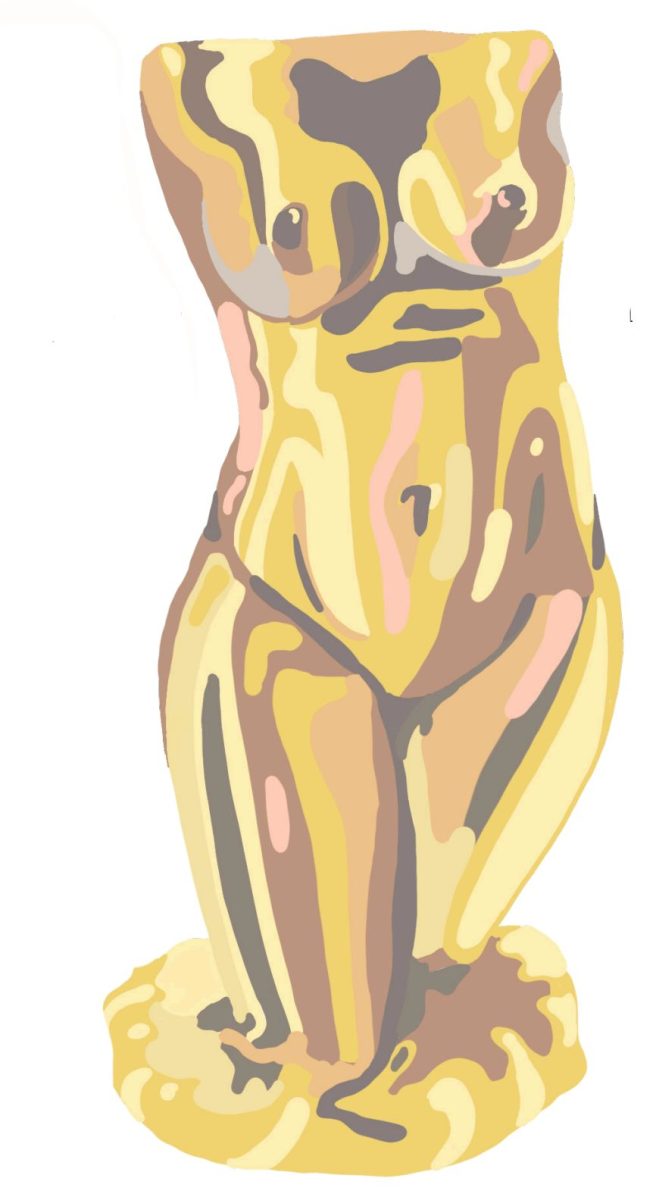
This depiction of what it means to be a woman, a real woman: one who desires sex just as much as men, if not more, is threaded within the series but specifically symbolized in a statue.
Introduced in the first episode and then featured throughout the two seasons, is a golden, headless, sculpture that reoccurs consistently in the season, symbolizing Fleabag’s grief, sexuality and power struggles.
This sculpture travels throughout the series in different humorous ways, popping up when you least expect it and always insinuating an altering moment for Fleabag.
It is the catalyst that throws Fleabag into the fire of her reality, whether the loss of her mother and her best friend, her relationship with sex and men, her hatred towards herself or her difficult stepmother.
Although just a bare woman’s chest and lower half, it represents Fleabag and most women’s struggles whether inward or outward. Once again, this series depicts a woman who can be a shitty person, a human being with flaws and have a jumbled-up mess of a life, because that is what it means to be simply human.
This show depicts a woman who can be a shitty person, a human being with flaws and have a jumbled-up mess of a life. Because that is what it means to be simply human.
We, as woman, are so often depicted as something out of a fairytale: unmistakably decent, clean and kind, but in “Fleabag” we see ourselves as we exist: messy, maybe sometimes mean and selfish, but most importantly, still loveable.
From the bottom of my heart, I hear you Fleabag, when you say, “Oh fuck it. I have a horrible feeling that I am a greedy, perverted, selfish, apathetic, cynical, depraved, morally bankrupt woman who can’t even call herself a feminist.”
There is an inexplicable comfort in a woman staring back at me from the TV screen, just like me and maybe you, too, saying what nobody wants to say aloud. Not only does the character break the fourth wall, but she breaks down this box, we often put ourselves inside that tells us how to act, what to think and say.
She, this fictional character, shows us not who we “should” or “shouldn’t” be, like so many other female fictional characters, but that we, too, can simply exist, unapologetically.
She doesn’t even have a name, this woman on my screen, but that’s simply the point, she is universal. She is me and she is you. She makes us laugh and makes us cry.
She, sometimes known as Fleabag, was written by a woman, for women and I know her well.