After enduring sexual harassment on campus last year, a former Coastal Carolina University student said he feels the university failed him and is now speaking out to reassure others they aren’t alone.
When Dante Battista began his freshman year at CCU, he expected comfort, community and familiarity. Raised in North Myrtle Beach, he grew up visiting the campus and believed continuing his education at CCU would feel like an extension of home.
As a freshman, Battista lived in DeCenzo Hall during the 2024-2025 academic year. He said the incident occurred around 1 a.m. on Aug. 30, 2024.
Battista said he had returned to his 10-person suite, many of whom he hardly knew at this point, after watching a Coastal football game at a friend’s. When he and his roommate settled in for the night, they suddenly heard banging from his suitemates’ room. He said at first the noise was muffled but grew louder, and soon he could clearly hear his name being shouted, followed by explicit, targeting harassment.
“They were moaning my name in a sexual way, saying I ‘take it up the ass,’ calling me a ‘fag,’” Battista said. “Then they moved to our door. They were trying to kick it in, jiggling the handle, still screaming and yelling and I’m just on the inside.”
Battista said he froze, unsure how to react. Then after calling his mother, he contacted the Tradition Hall front desk, where they sent an RA to intervene and file an official incident report. He said the students refused to take responsibility, but the matter was referred to the university’s Title IX office.
What followed, according to Battista, was a Title IX process that lasted more than seven months.
Battista said that while the case was ongoing, he remained in DeCenzo hall and the fear of running into the students that were involved made staying increasingly difficult.
“I spent every single night thinking while I was still there, when I walk out of my dorm into the bathroom, what if they’re on the other side of that door? What are they going to do?” Battista said.
Battista requested to be released from his license agreement Sept. 6, 2024. It wasn’t until he emailed the university president and copied the director of housing, Battista’s hearing advisor, his mother, and the director of DeCenzo hall, that he was finally released from his housing agreement over two months later.
Battista said the Title IX complaint was filed on Sept. 26, 2024, followed by months of investigation and a live hearing on March 10, 2025.
According to the Determination Memorandum, the decision maker found both Section I.B. and Section III. N.b. of Coastal Carolina University Title IX provisions were violated.
Section I.B. states: “Discrimination based on sex means unfair or unequal treatment in any University Education Program or Activity based on sex, gender, genetic information, sexual orientation, pregnancy, childbirth, or related medical conditions, or as established in Title IX and the regulations promulgated thereunder.”
Section III. N.b. states: “Hostile Environment – Occurs when an individual endures unwelcome sexual conduct that a reasonable person would find so severe, pervasive, and objectively offensive so as to effectively deny that individual equal access to the University’s Education Program or Activity.”
The initial decision in March sided with Battista, finding that the reported events ”likely” occurred. The students involved were sanctioned with removal from university housing, required behavioral counseling, a written reflection and disciplinary probation.
Two weeks later, the respondents submitted an appeal. The appeal approval was issued April 11, reversing the majority of the sanctions. According to the appeal decision, “in the respondent’s appeal documentation, they expressed a sense of remorse that was not evident in the initial investigation.”
The respondents were then relieved from disciplinary probation and allowed to return to University Housing if they complied with the two other sanctions.
“I’ve been trying to come to terms with what happened to me and that the university didn’t, it felt to me, take it seriously,” Battista said.
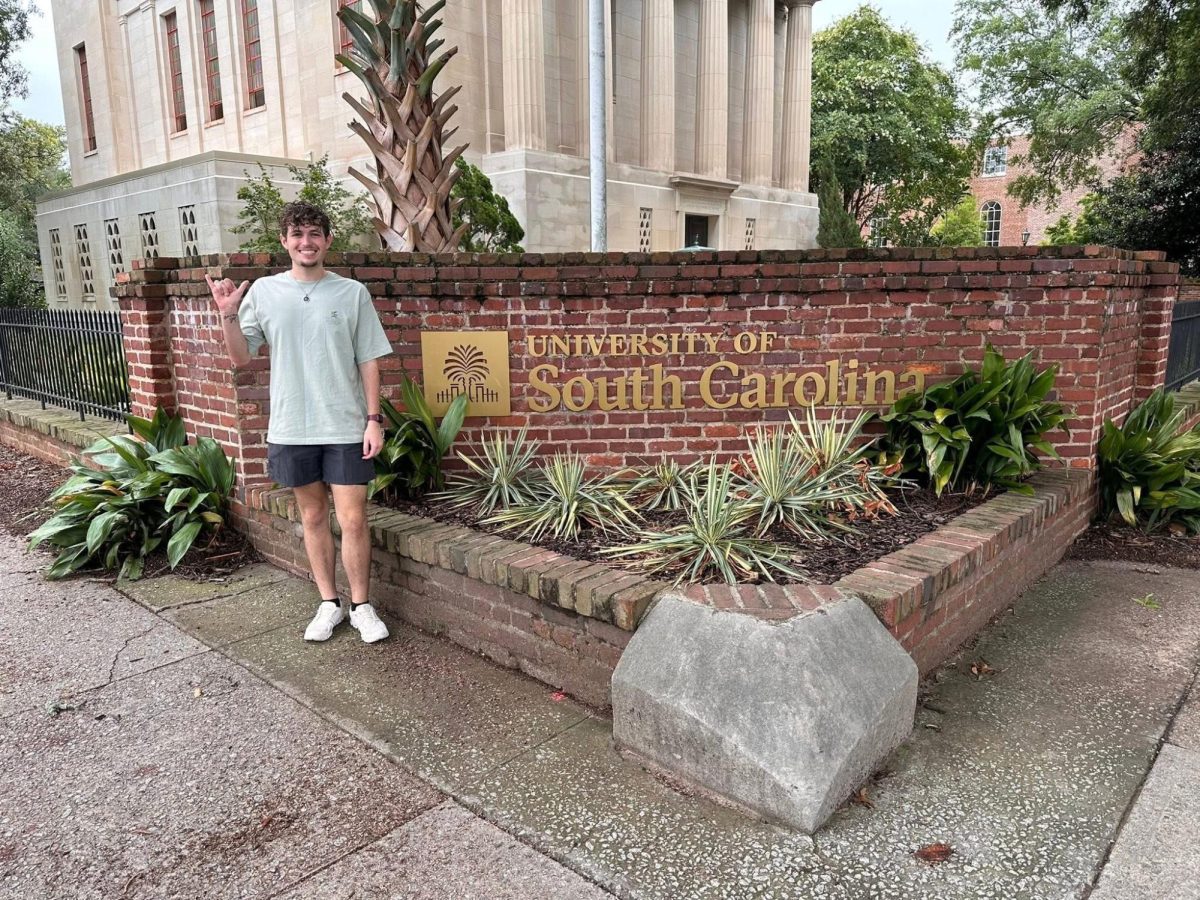
Battista has since transferred to the University of South Carolina in Columbia, where he studies public health.
According to the National Sexual Violence Resource Center, 26% of gay men have experienced some form of sexual harassment, and one in ten college students face sexual misconduct. Battista said he hopes sharing his story will make other students, especially LGBTQ+ students in the south, such as himself, feel less isolated.
“It’s something that happens on college campuses a lot, but it’s not really talked about that much,” Battista said. “Everybody that is going through something like this, they are not alone and yes, it is so hard, but it gets better.”
The National Sexual Assault Hotline is 1-800-656-4673. The CCU Department of Public Safety on-campus emergency number is 843-349-2911.